Showing posts with label circuitry. Show all posts

Thursday, November 10, 2016

Full STEAM Ahead: The Value of Family STEAM Nights


As a new school year begins educators are faced with the age-old dilemma of “how do we get families to be involved?” It’s not a new phenomenon- parents work, siblings have after school sports events, children live in multiple households due to divorce- all of these things leads to a lack of connection between the school culture and the home culture. Every year educators scratch their heads wondering “How can we get them to read our email? Watch our video? Respond to notes we send home?”

We seek new and inventive ways to connect with families- through mediums like the use of social media, Remind texting, or mass phone calls. But the question remains...what would make these families want to be a part of the school community? Research shows ““When schools, families, and community groups work together to support learning, children tend to do better in school, stay in school longer, and like school more.” That’s the conclusion of A New Wave of Evidence, a report from Southwest Educational Development Laboratory (2002)” (http://www.nea.org/tools/17360.htm).
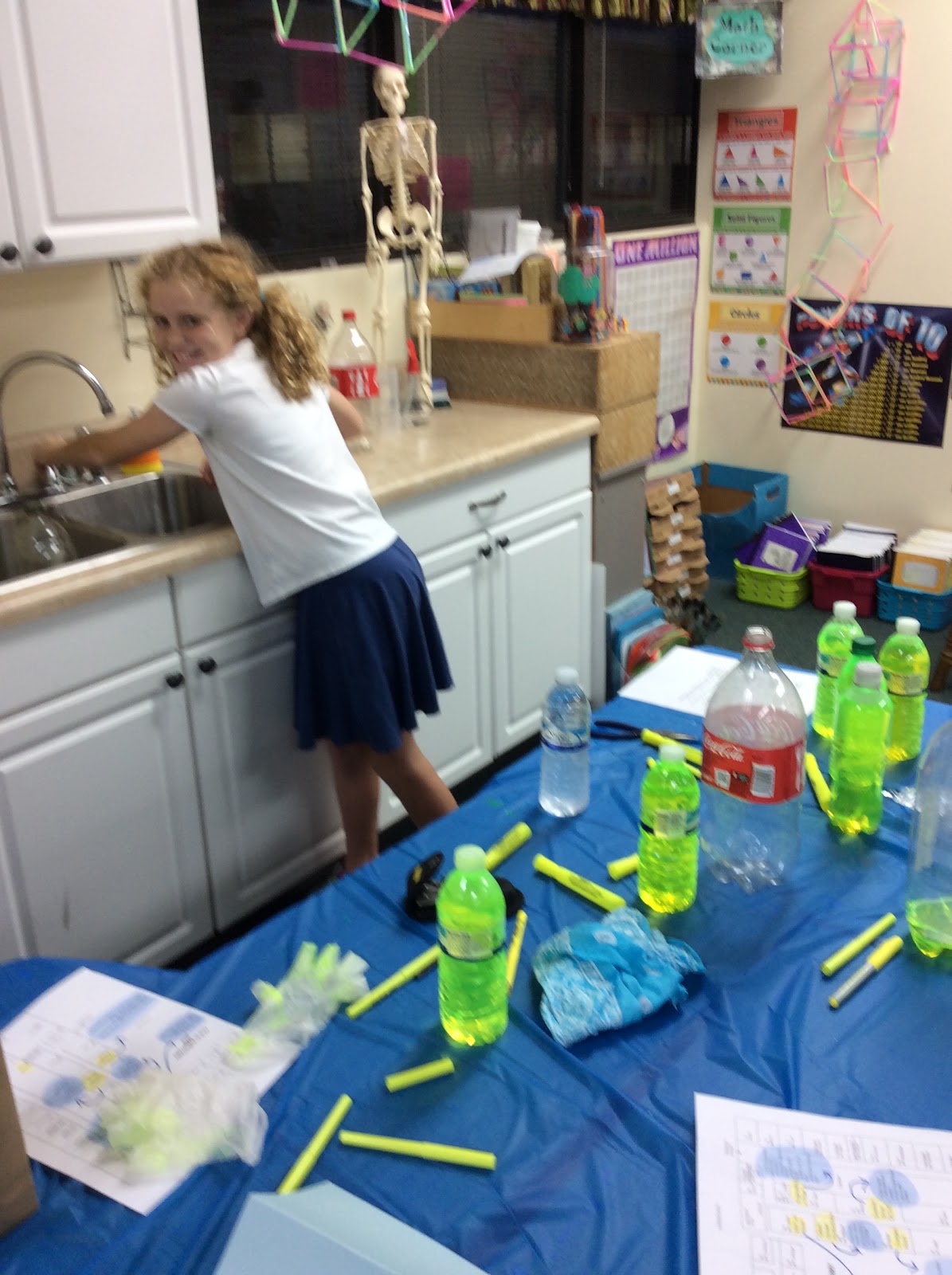
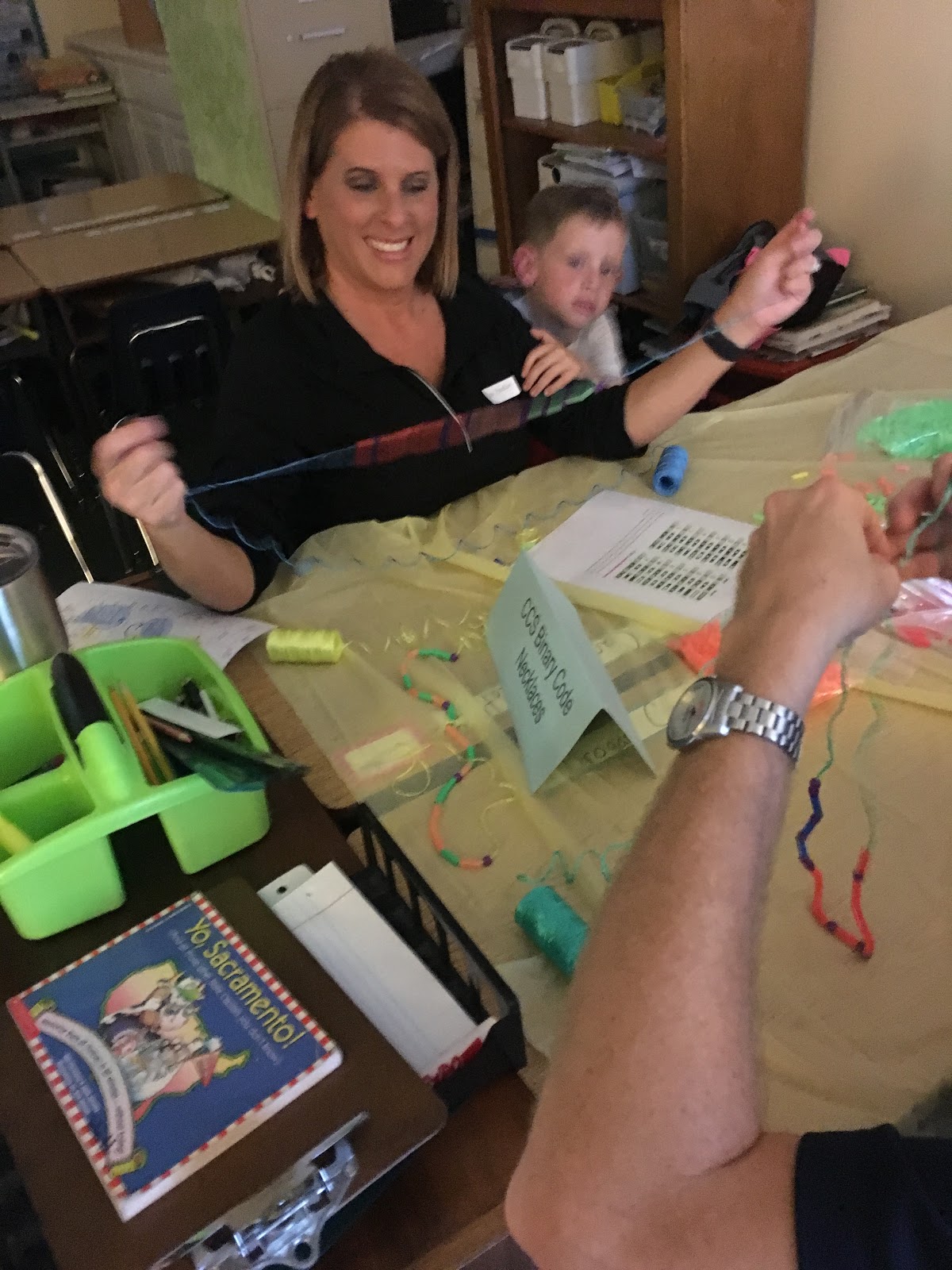
IMG_5996.JPGThis year due to a generous grant from a benefactor, we have been able to increase the magnitude of our STEAM-based (science, technology, engineering, the arts, and math) curriculum at our school. So what we are trying at our school this year is to have one STEAM Family Night per semester. Getting families engaged early in the year and showing them the benefits of STEAM education is the goal. So why not create a family STEAM night that coincides with homecoming week?

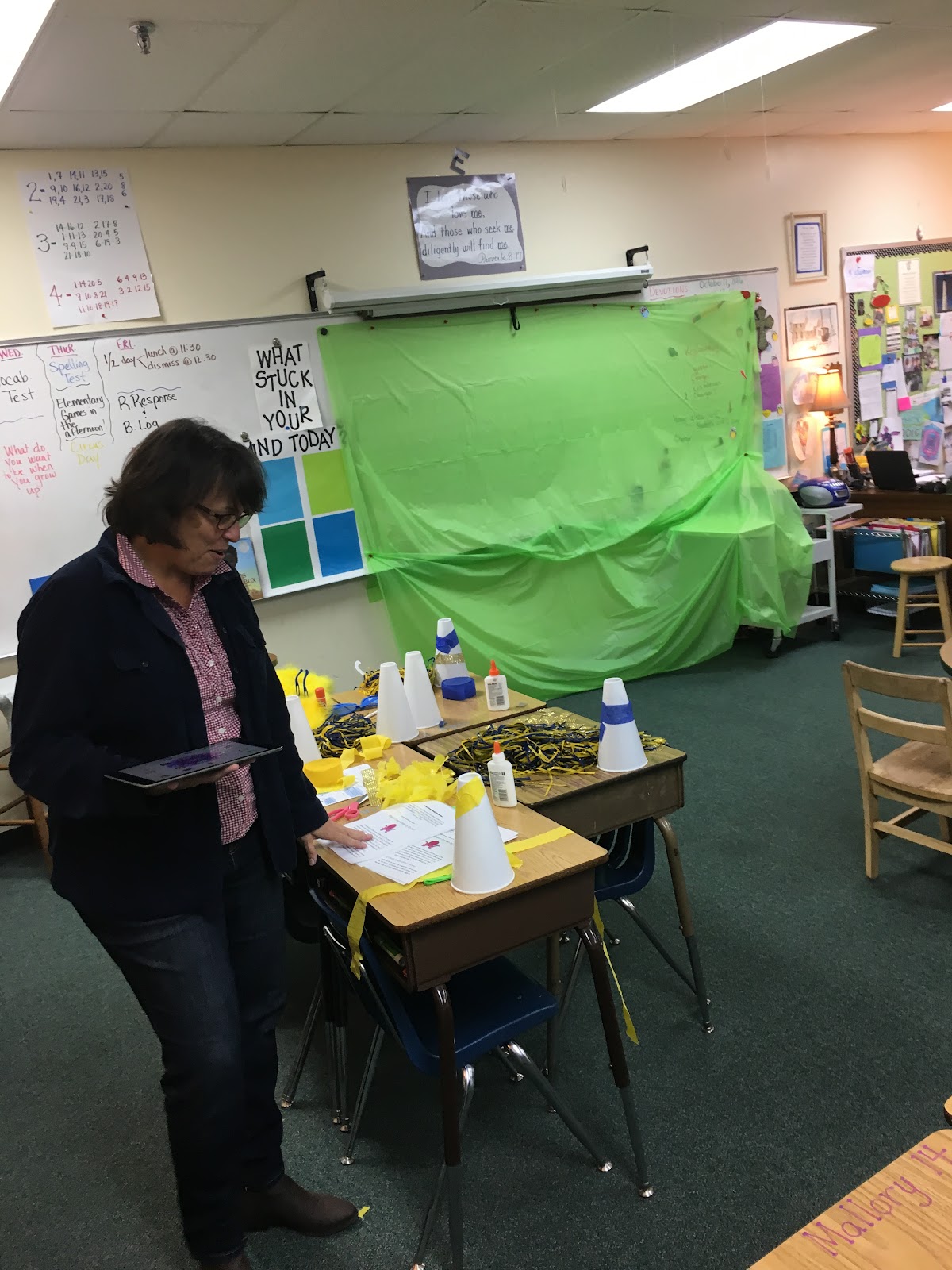
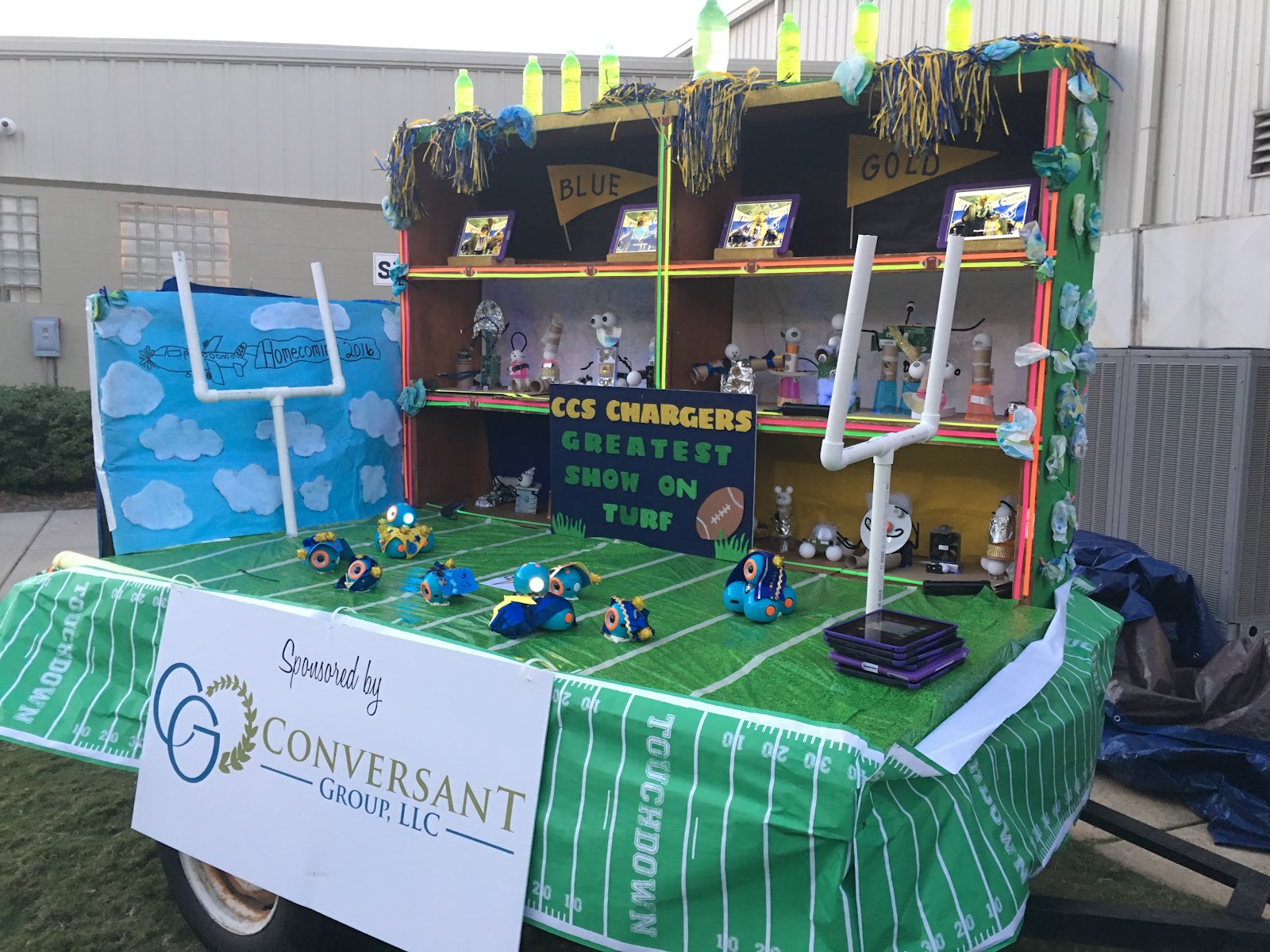
We are sent out an invitation for a Family STEAM Night happening in October. Our focus was to prepare a float for homecoming that represents all the great things going on in the elementary school in regards to science, technology, engineering, the arts, and math as well as have some “take home options” for attending families. There were multiple rooms set up where students and their families had hands-on night of learning and creating. A parent was required to be present and participating with students throughout the evening.

Things to consider when having a STEAM night:
  • Require parents to participate with their child. This may sound manipulating to get parent involvement but many STEAM activities are dirty, maybe even dangerous, if not done correctly. Having parents participate does two things: Gives extra sets of helping hands and creates a culture of belonging. When a student knows there is a STEAM night, they are going to want to come. As parents know, pressure from your child to do something is a powerful thing.
  • Have a signup form for families. We have 400+ students in our elementary. That could mean 20 families or 300 families might show up for STEAM night. Creating a signup form allows you to spend time preparing adequately- without over preparing as well.
  • Pick a theme. This first STEAM night will be based on the homecoming theme for our school “The Greatest Show on Turf.” Themes help to build unity for your evening, especially if you plan to have more than one STEAM night throughout the school year.
  • Look for resources. There are plenty of great resources for STEAM Nights on Pinterest, makewonder.com, and there are many schools blog about STEAM night experiences as well. I personally use my Twitter account and search the hashtags #STEM and #STEAM to find resources.


Our plan was as follows:

Bolt Up room-
 Make lightning (didn't work well): http://www.learnplayimagine.com/2013/04/how-to-make-lightning.html?m=1
Light Up Lifesavers: http://discoverykids.com/activities/light-up-lifesavers/
Learning more about Dash and Dot:    https://www.youtube.com/watch?v=XluvddnVqmg

Engineering A Float room -
Prior to the actual STEAM night all the pieces for the float will be cut and ready to put together waiting for student/parent help. The actual building of the float out of wood will take place in this “room” on STEAM night.
Chromatography art for decorating float: https://www.pinterest.com/pin/26106872821004092/

Chargers room-
Dress up Dash and Dot robots as cheerleaders, fans, and football players (idea adapted from: http://coolmomtech.com/2015/08/dot-and-dash-coding-projects-wonder-workshop/)
Learn about Circuitry: Different Little Bits circuitry challenges were available
Create Steampunk robots out of old computer parts: https://www.pinterest.com/explore/steampunk-robots/

Greatest Show on Turf room-
(creation of tree and science experiments on grass)

Green Screen Productions-
Using the app Green Screen by DoInk have students use photo booth props to create videos of themselves as Charger fans. https://www.youtube.com/watch?v=QlH3h19ablI

I think it is fair to say this was a successful STEAM activity. STEAM night allowed families to bond, created communication/connections and a sense of belonging and ownership in homecoming week. It also gave parents a taste of the great opportunities their students are participating in weekly in the classroom settings.

IMG_5869.JPG73BCA1C0-60DE-4C73-9517-C8811E1D0F83.JPGIMG_5871.JPGIMG_5872.JPG


Tuesday, November 8, 2016

Full STEAM Ahead: Steam Night and Critical Thinking

Several weeks ago we had our first ever "Family STEAM Night" at CCS Lower School. It was a delightful night but not without some troubleshooting needs. During the day I decided to create examples for all of the different stations and had some issues in making the lesson below work. I loved the concept so I handed it off to one of our teachers and he problem solved to make the idea work.

What really caught my attention was the critical thinking and problem solving that went on at the rotation itself. It was true scientific method/ problem solving at it's finest! Read what Mr. Lubben said afterwards (directions for the station follow):

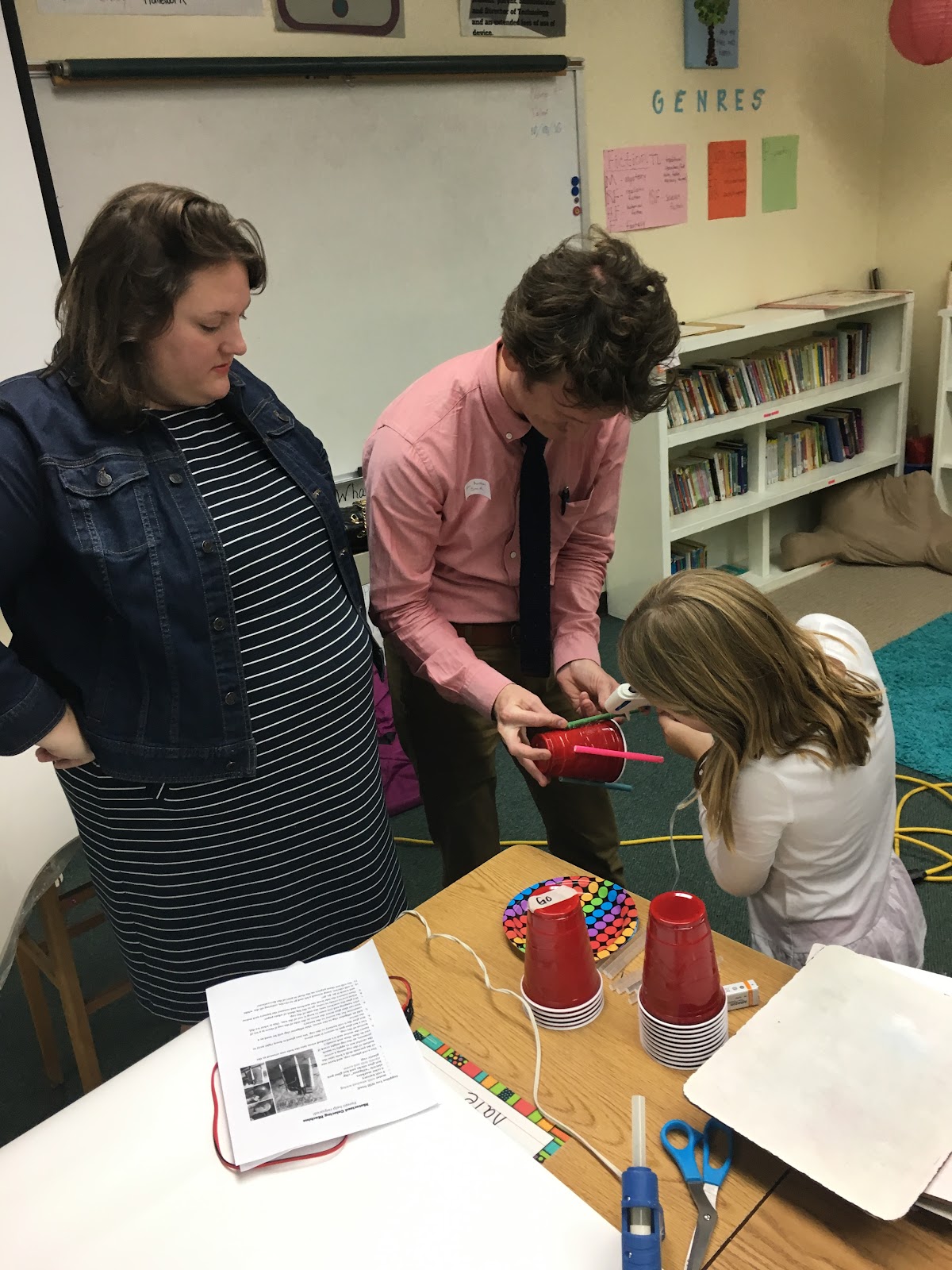
  "The 'Color Bot' table in Mrs. Tallent's room last Monday's STEAM Night was a work in progress.  The kids who chose this activity used printed instructions to create electric-powered vibrating plastic party cups with uncapped art markers as legs.  They improvised, however, by cutting away parts of the cups, gluing the pens instead of the cups, and most importantly, as we observed, hand-holding the 9 volt batteries instead of having them go for the ride the tiny electric motors provided.  It made the cups lighter and allowed them to dance and twirl across the glossy paper creating spirals and zigzags of color.  The magic of it all was that the kids made changes on their own and observed the difference between various test models.  It was true science and art in action!"

Motorized Coloring Machine
Parent help required!

coloring bot.png


Supplies You Will Need:                                


  1. Use a red plastic cup, and have one of the parents drill a hole into the bottom of the cup using a screw. (Be careful not to apply to much pressure, as the cup might crack if you do that. Slow and steady.)
  2. Insert the motor and it’s attached wires into the hole you created in the bottom of the cup.
  3. Use a hot glue gun to secure it into place.
  4. Hot glue the 9 volt battery to the cup. We just glued it down right next to the motor.
  5. Add an alligator clip to the wires. This alligator clip will be used as a connector for the motor to the battery.
  6. You can also glue down the wires to the side of the cup if there is a lot of wire hanging and you want to keep it out of the way. This is what we did.
  7. Hot glue the markers onto the side of the cup.
  8. When you’re ready to color, go to the big sheet of white paper.
  9. Then remove the lids from the markers and connect the battery and motor and watch it go, go, go!
  10. It will vibrate, jump around a bit and go in circles, coloring all the  while.
  11. We will use these papers on the float as part of the decorations!


Thursday, August 11, 2016

Charging full STEAM ahead in lower school!

Our lower school has been working hard for the last two years to create integrated thematic units that create cross-curricular connected opportunities for learning. Research has long shown the value of connection and CCS has worked hard to embrace thematic units more deeply for next year. Because nothing ever happens by chance, God has also allowed the lower school the opportunity to put "hands and feet" to these units through a generous grant from The Conversant Group. For those of us working, plotting, and planning towards more STEAM (Science, Technology, Engineering, and Math) endeavors for our lower school students, this grant fell into our laps much like manna from heaven! It has allowed our school to fast forward our desires and goals for more STEAM experiences in the elementary school.

What does this look like? As the technology coordinator in the lower school, it has been my desire to create opportunities for more computer science enriched endeavors for our students at every grade level. With this grant, we were able to hire our STEAM coordinator. She and I will work together with our curriculum coordinator and teachers to create project-based learning (PBL) opportunities that directly build on the thematic units our teams of educators have been working on for the last two years. Project-based learning will become the "hands and feet" of these great units! The beauty of PBL is that it creates authentic learning opportunities for our students and gives them some voice and choice in the direction of their learning. Because PBL is often a team approach, it will teach the important 21st century skill of collaboration to our students. Our students will have multiple opportunities throughout the year to work with our team as we co-teach with the classroom teachers to provide these rich project-based learning experiences that may include things such as coding, 3d printing, videography, engineering, and problem solving opportunities. But that's not all...

The 2016-2017 school year also brings the concept of Friday elective days for our fourth and fifth grade students. These students will be able to choose from a variety of learning opportunities including anything from knitting to mountain biking, but due to our grant every quarter at least one offering will be an experience to enhance STEAM learning. Quarter long opportunities in coding, circuitry, 3d printing, and robotics are just a few of the things on the drawing board for our students. Speaking of robotics, Mrs. Yandell will also be heading up two after school opportunities that will include the first ever lower school robotics team and a circuitry after school learning experience as well! Last year our middle school had its first ever robotics team that received many accolades, we want to do the same in the lower school and build an even stronger foundation for robotics at CCS!

According to The New York Times, 65% of elementary students' jobs aren't a reality yet and many of them will be STEAM based. By exposing our students to a variety of STEAM activities we feel we are preparing them to think positively and expectantly towards the future before them. It's exciting times in the lower school as we are charging full STEAM ahead with our students!